

Paper Volumes I
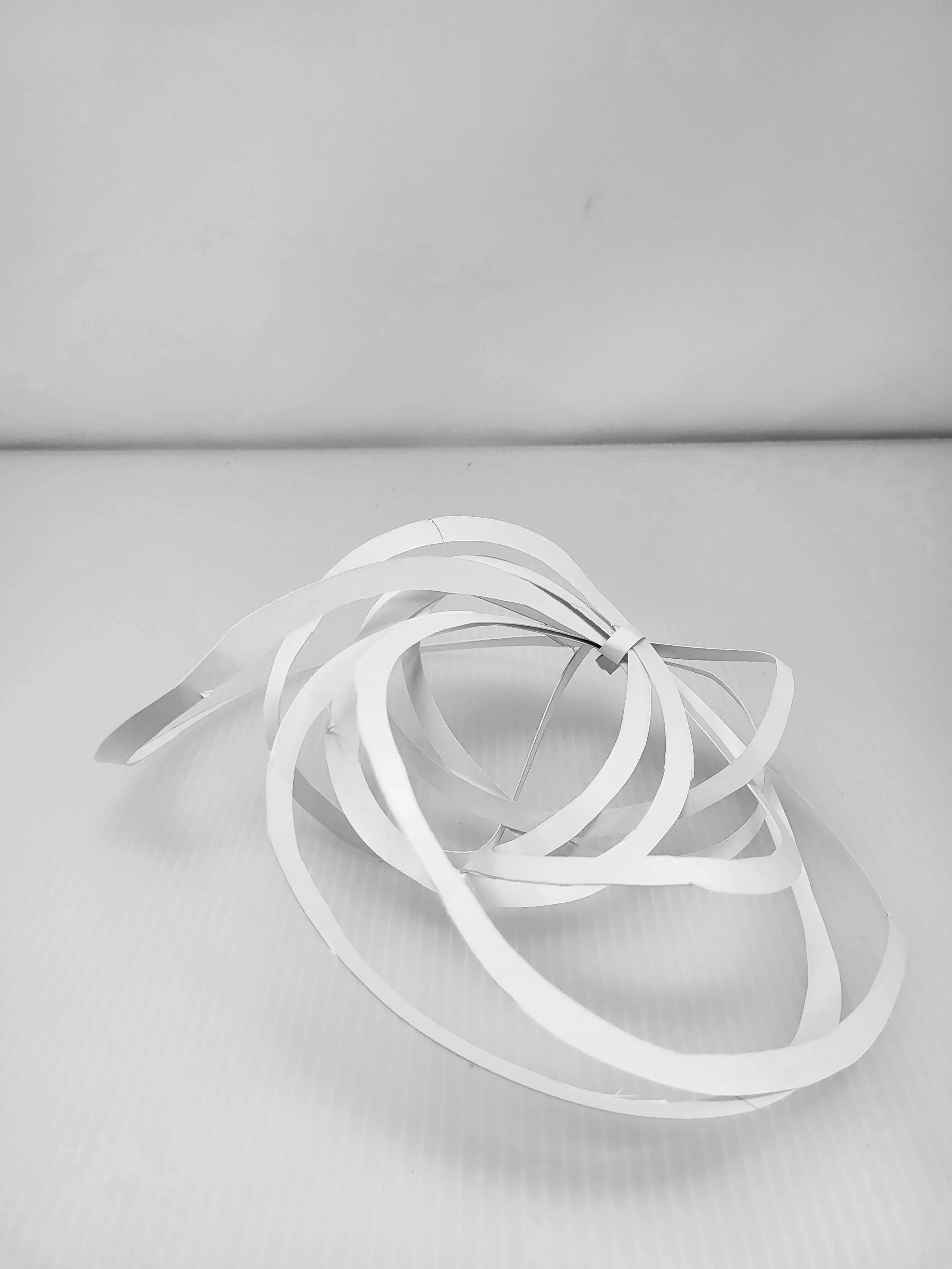
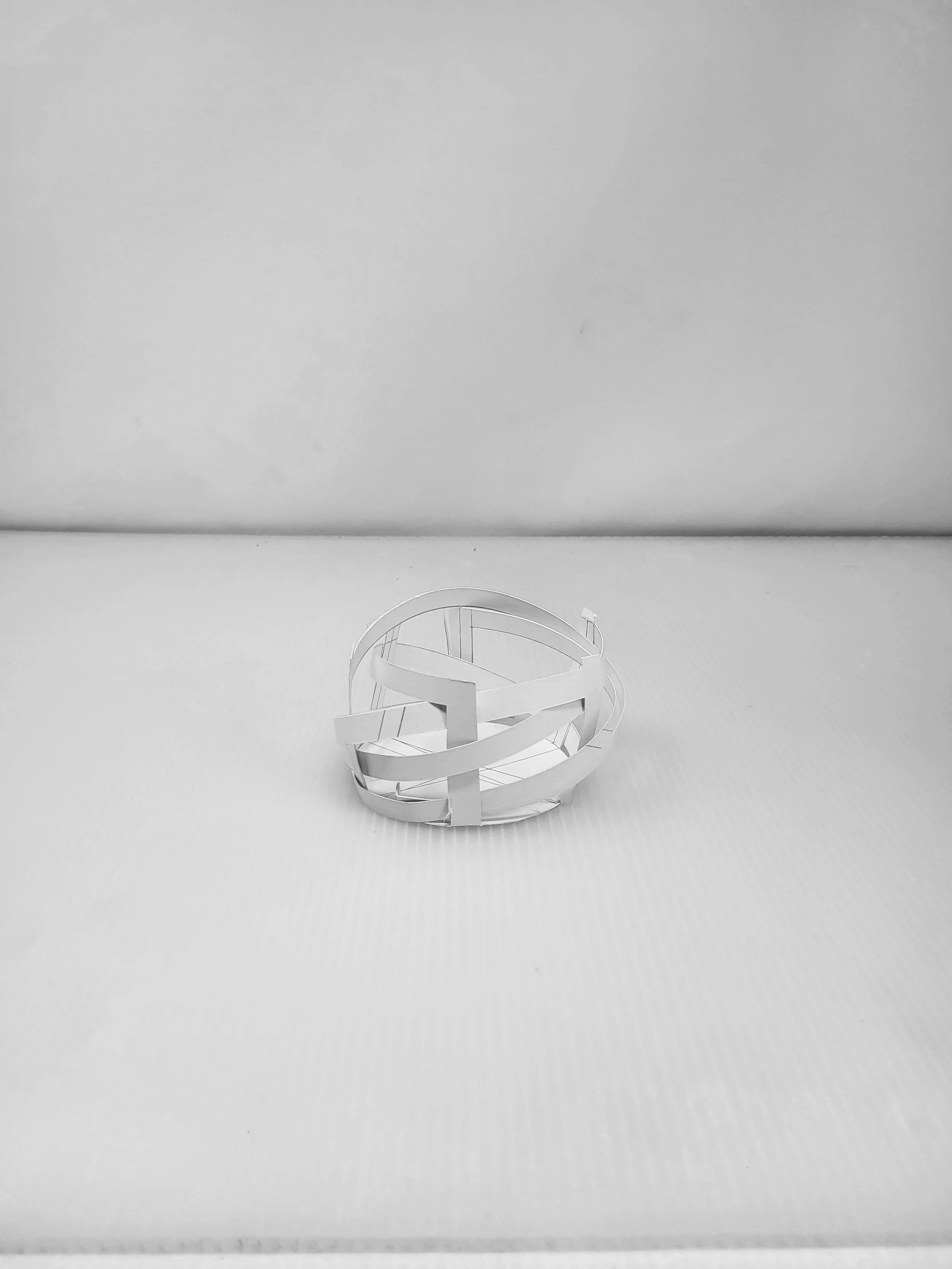
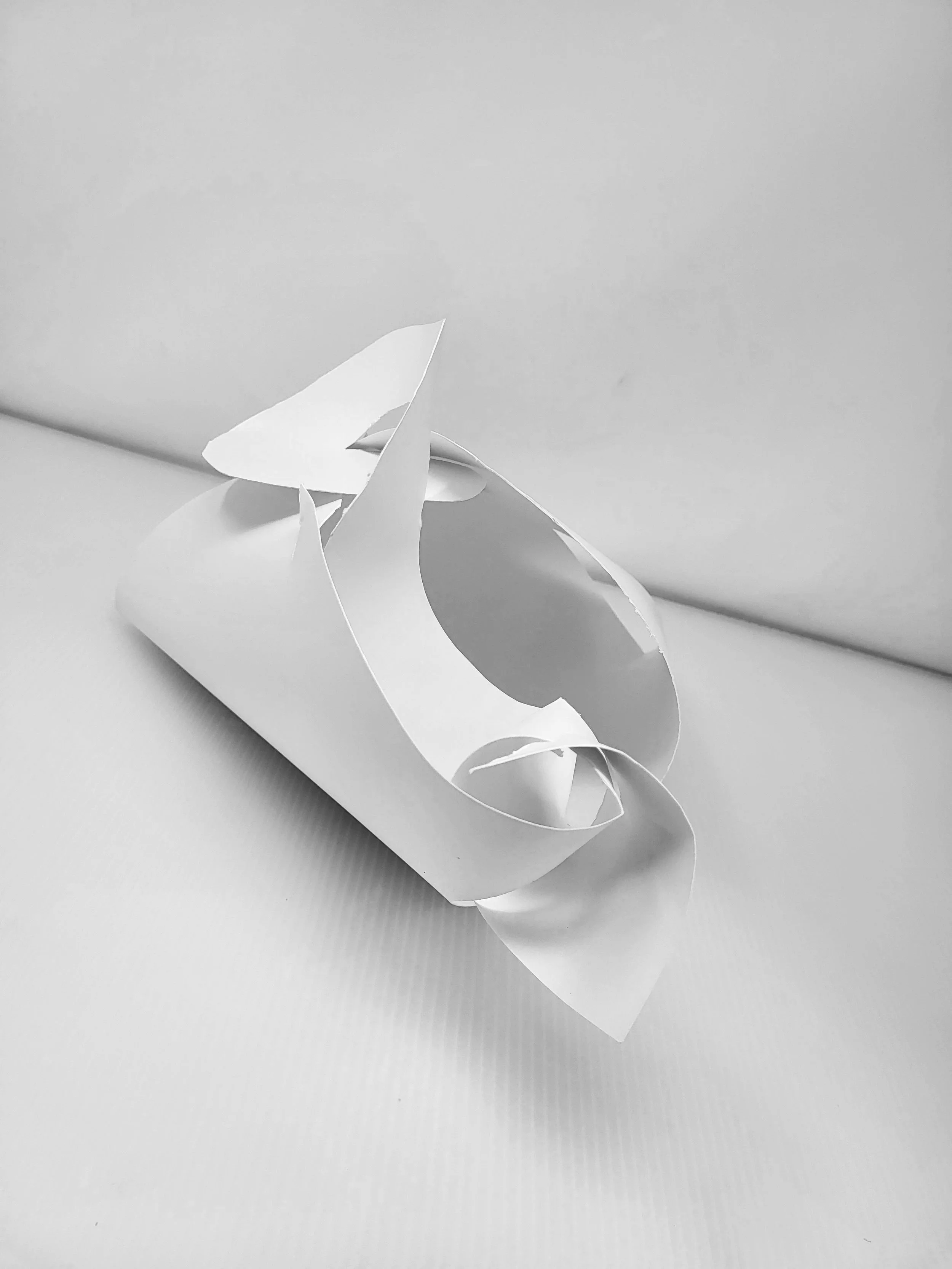
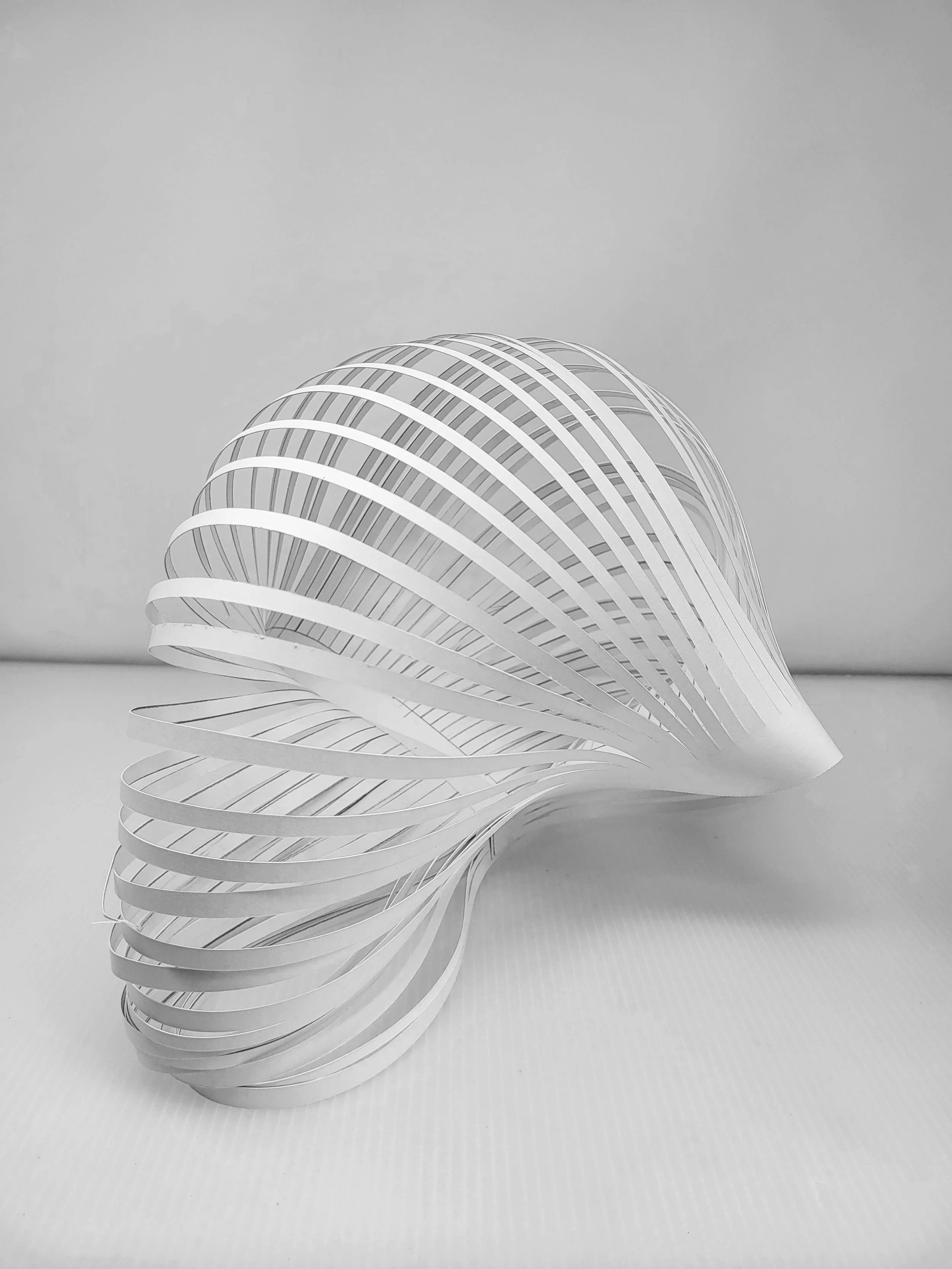

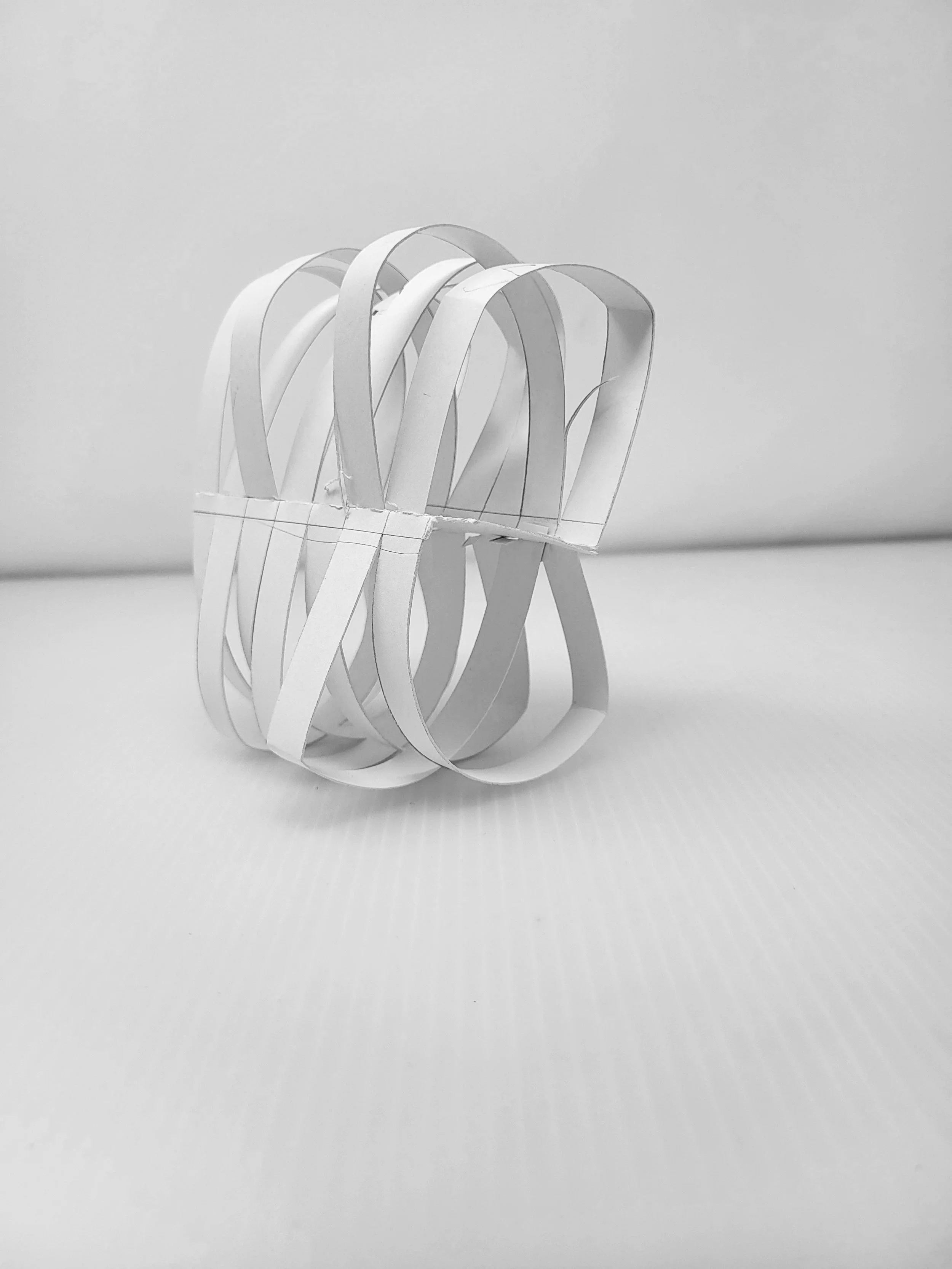
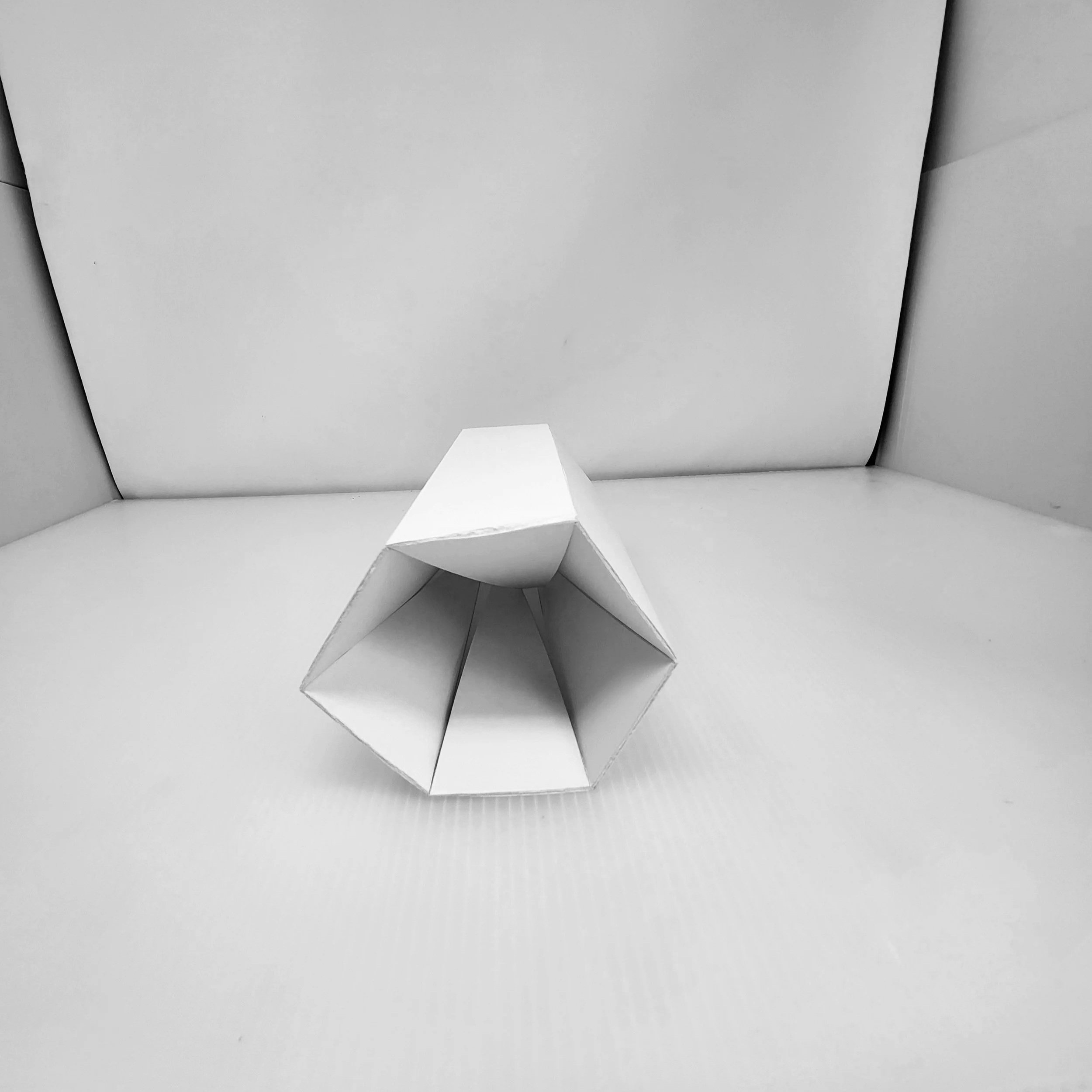
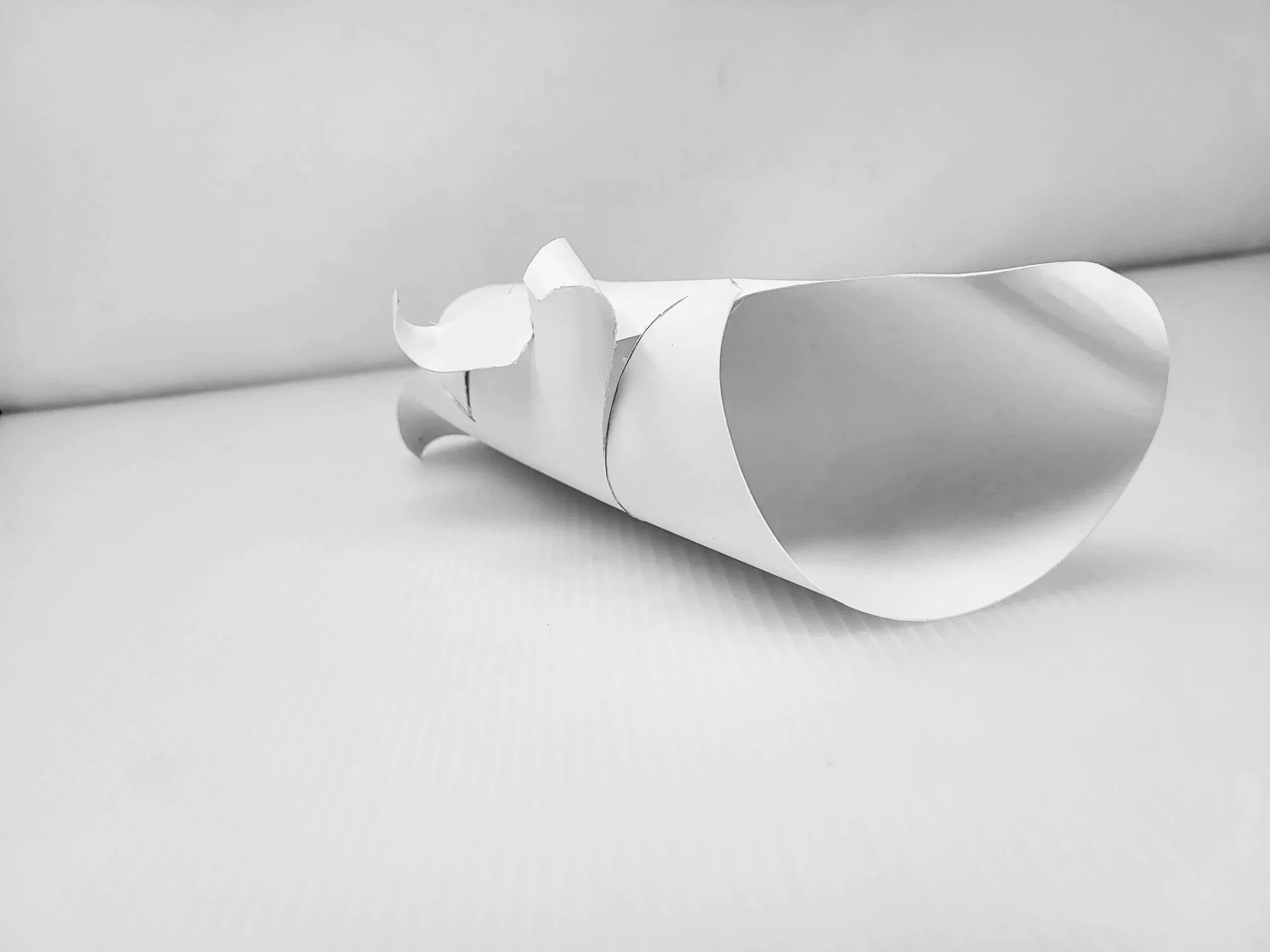
Reflection
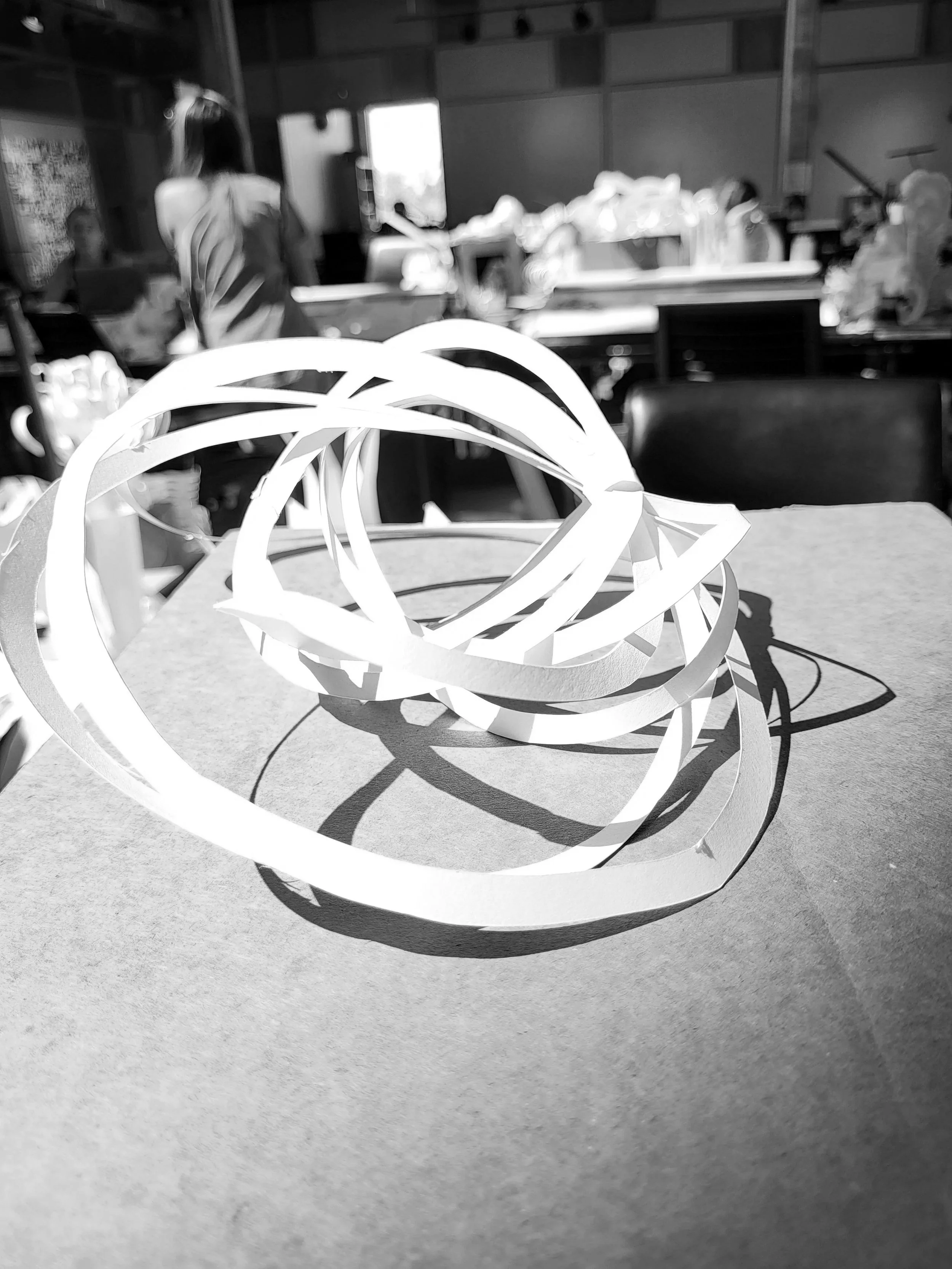
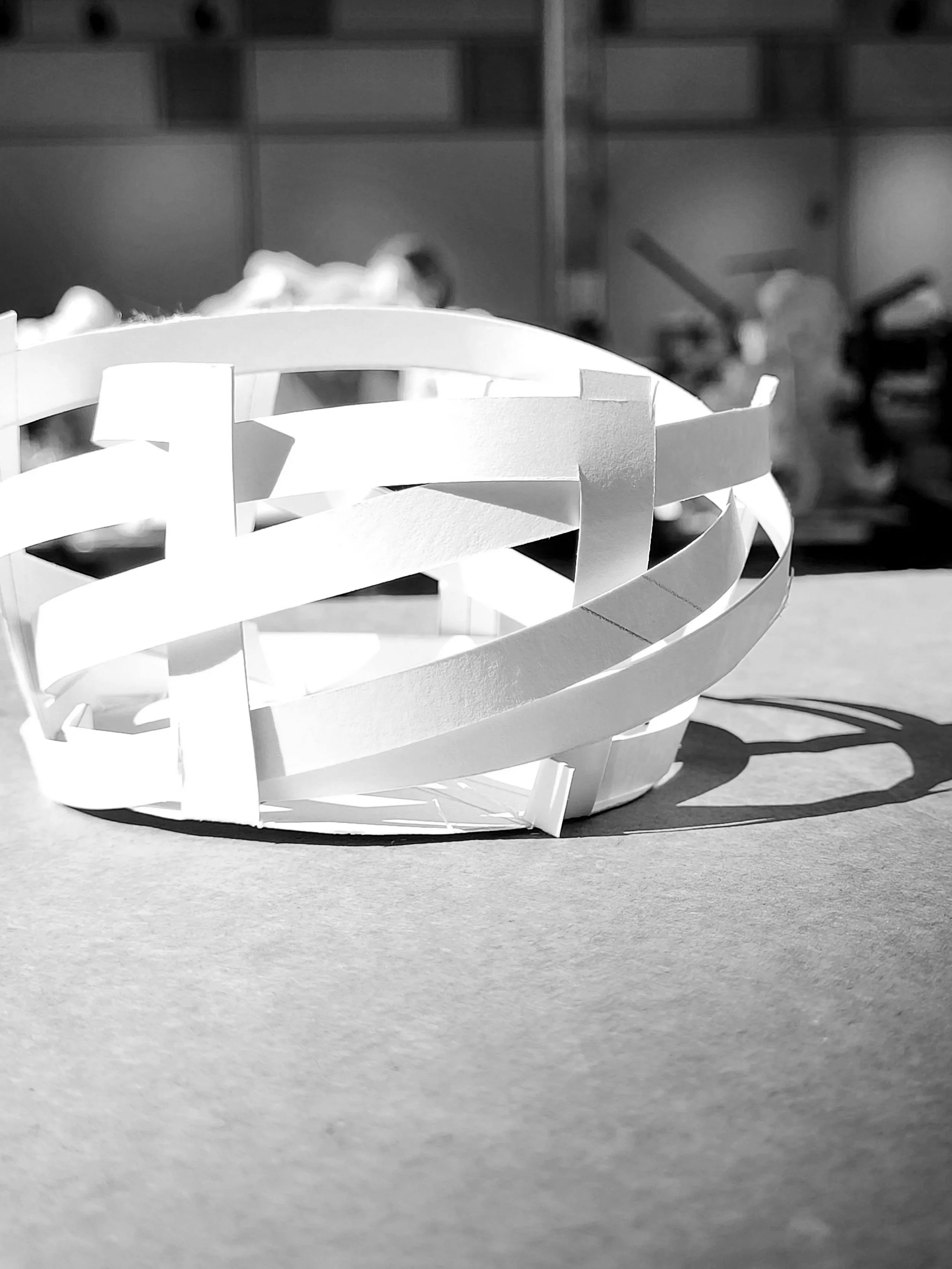
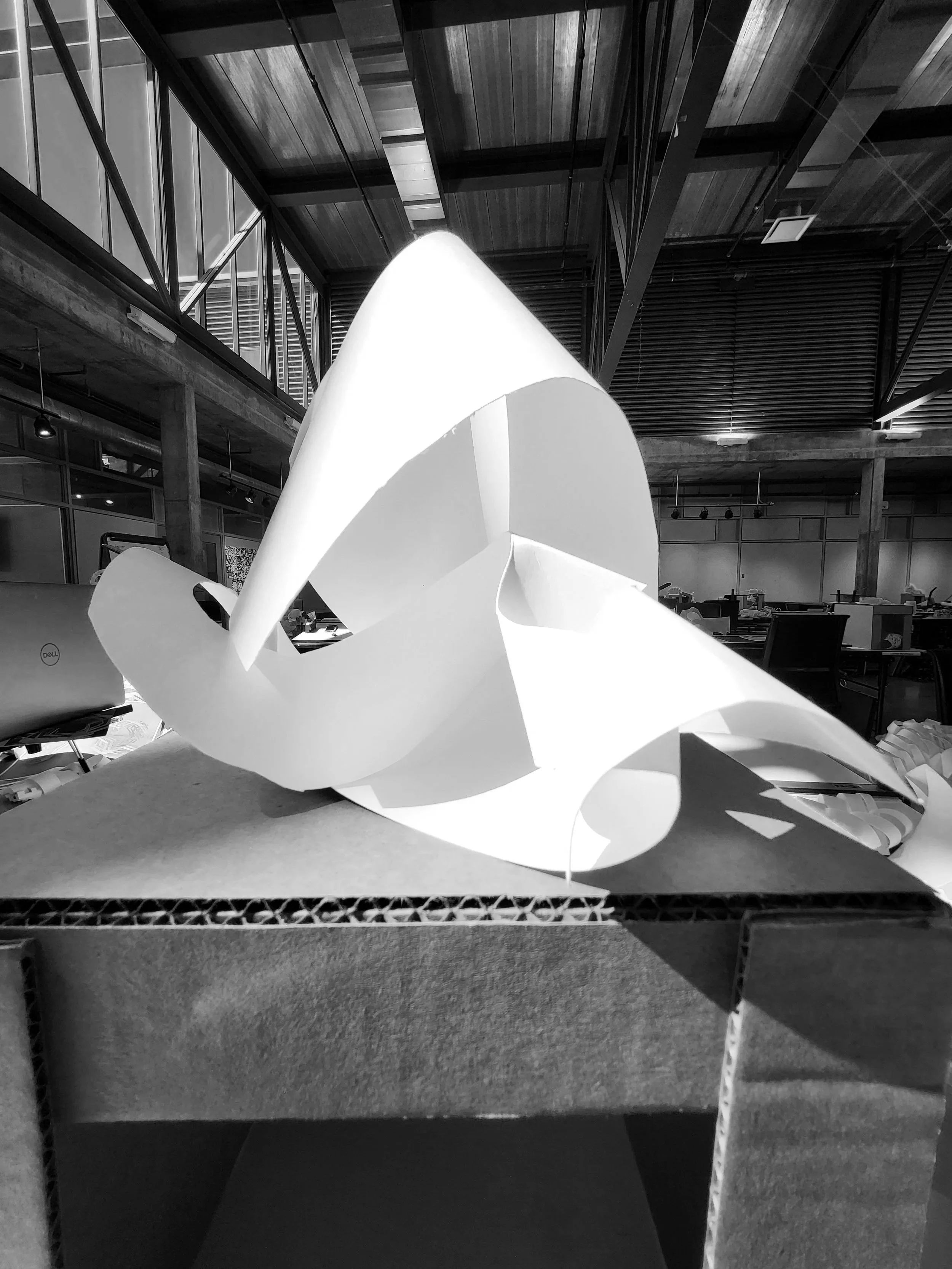
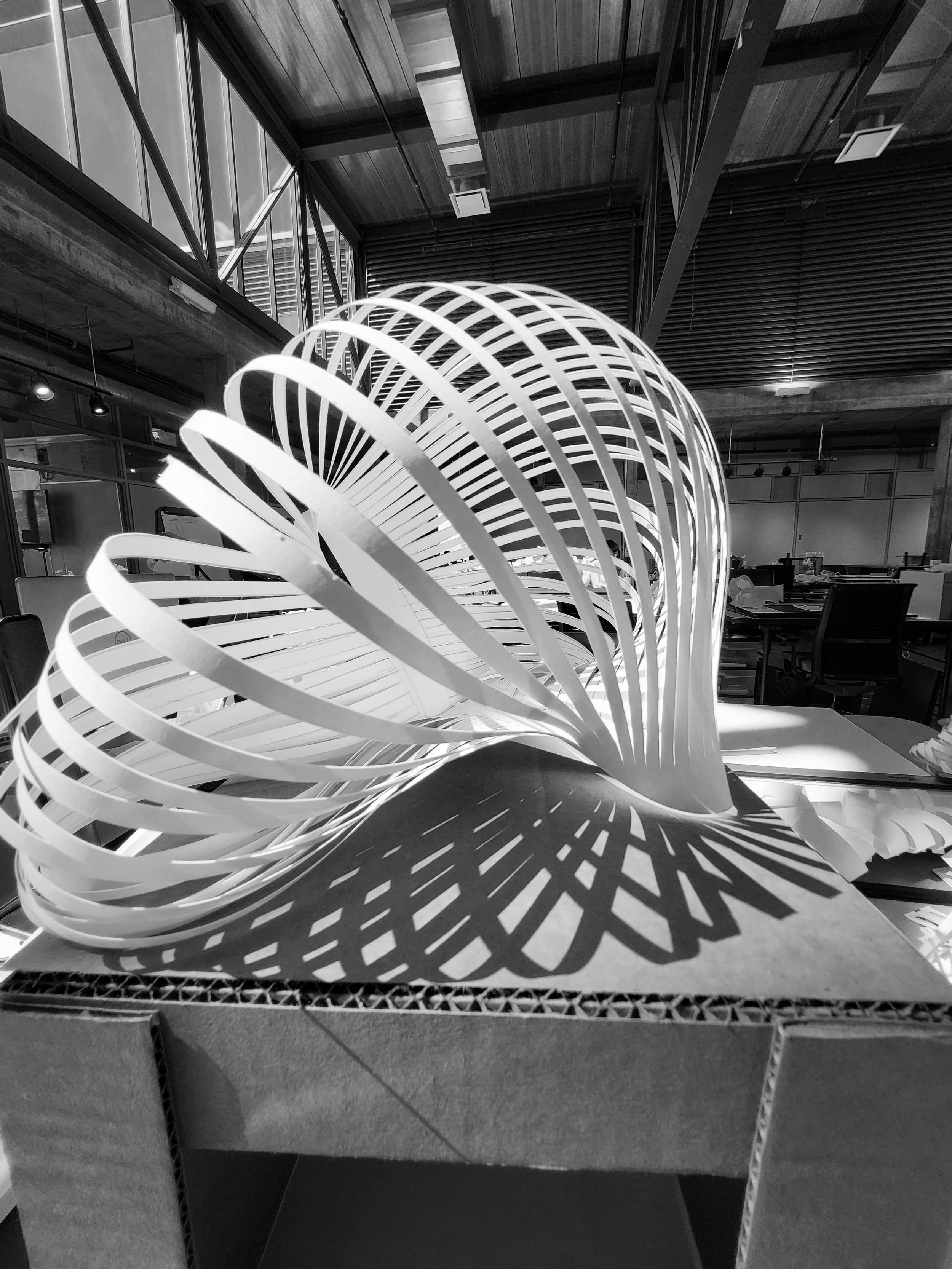
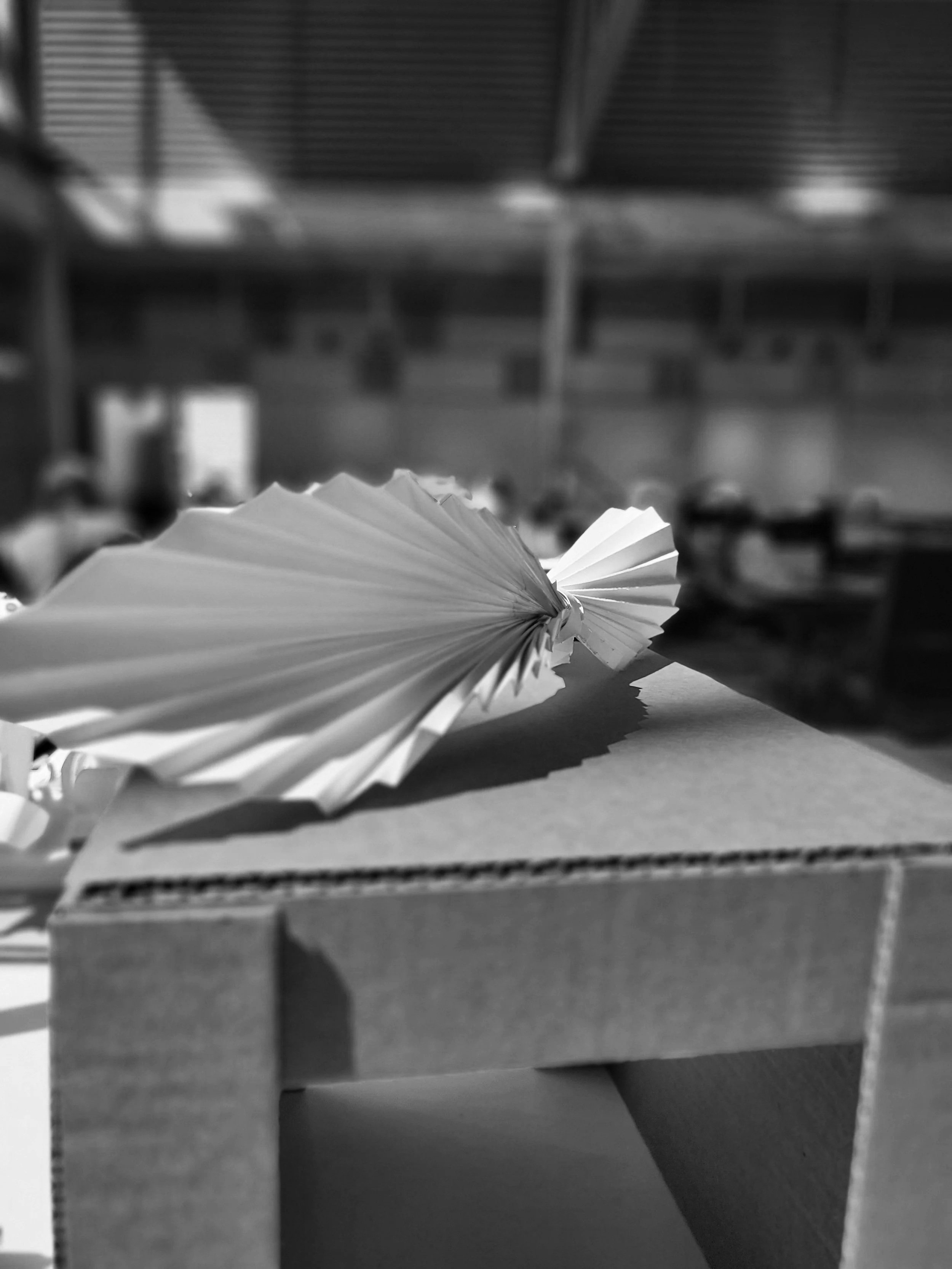
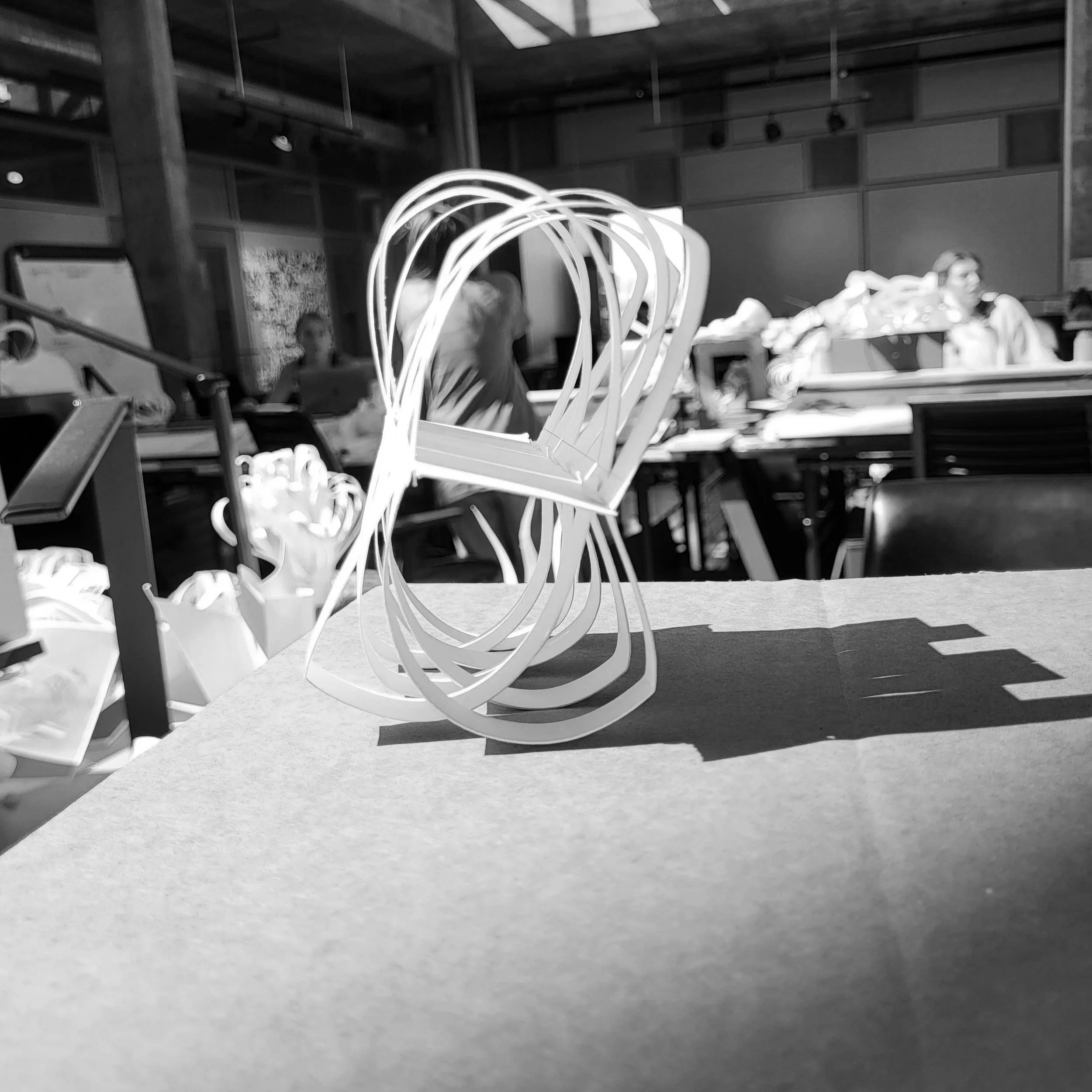
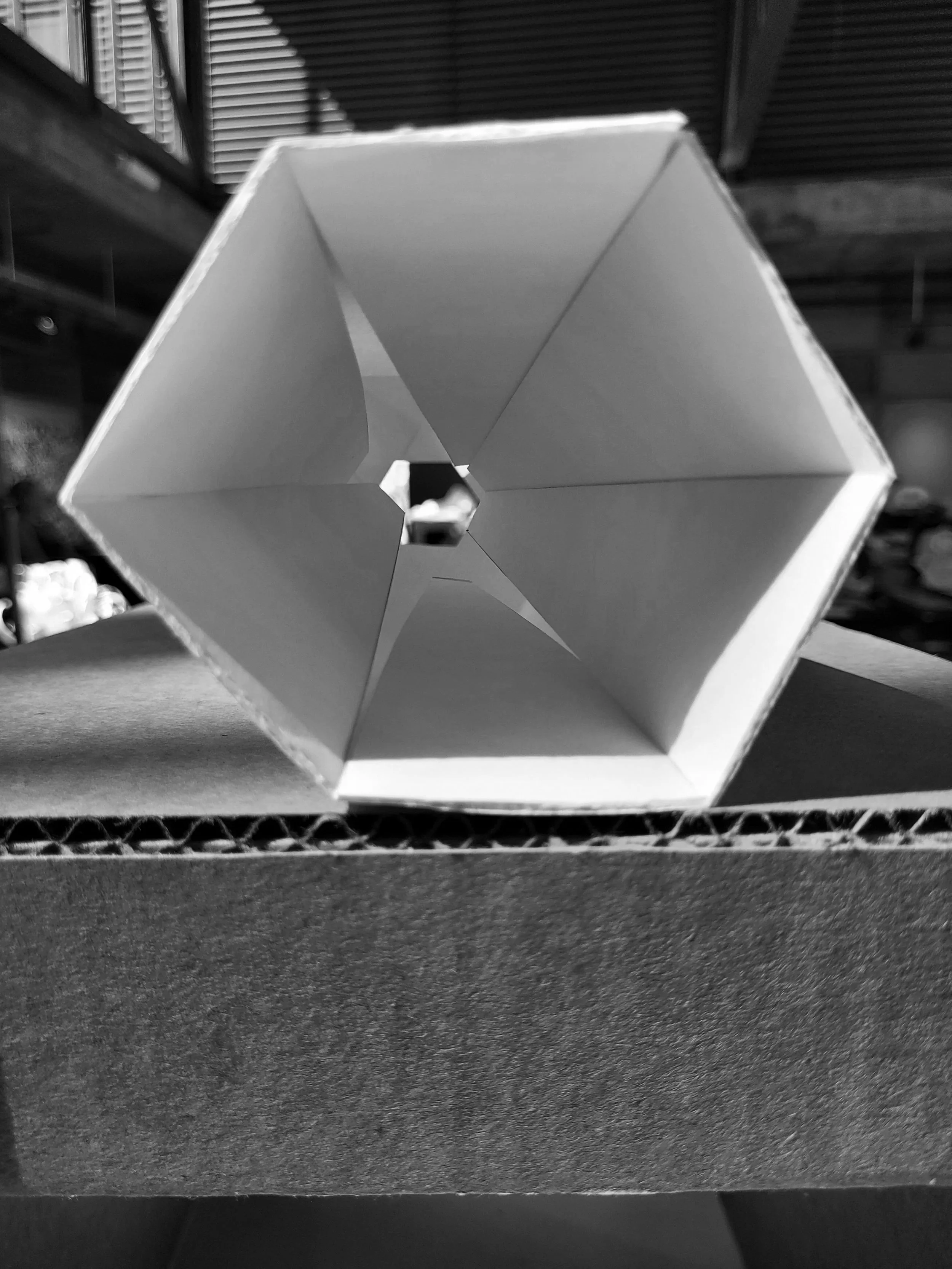
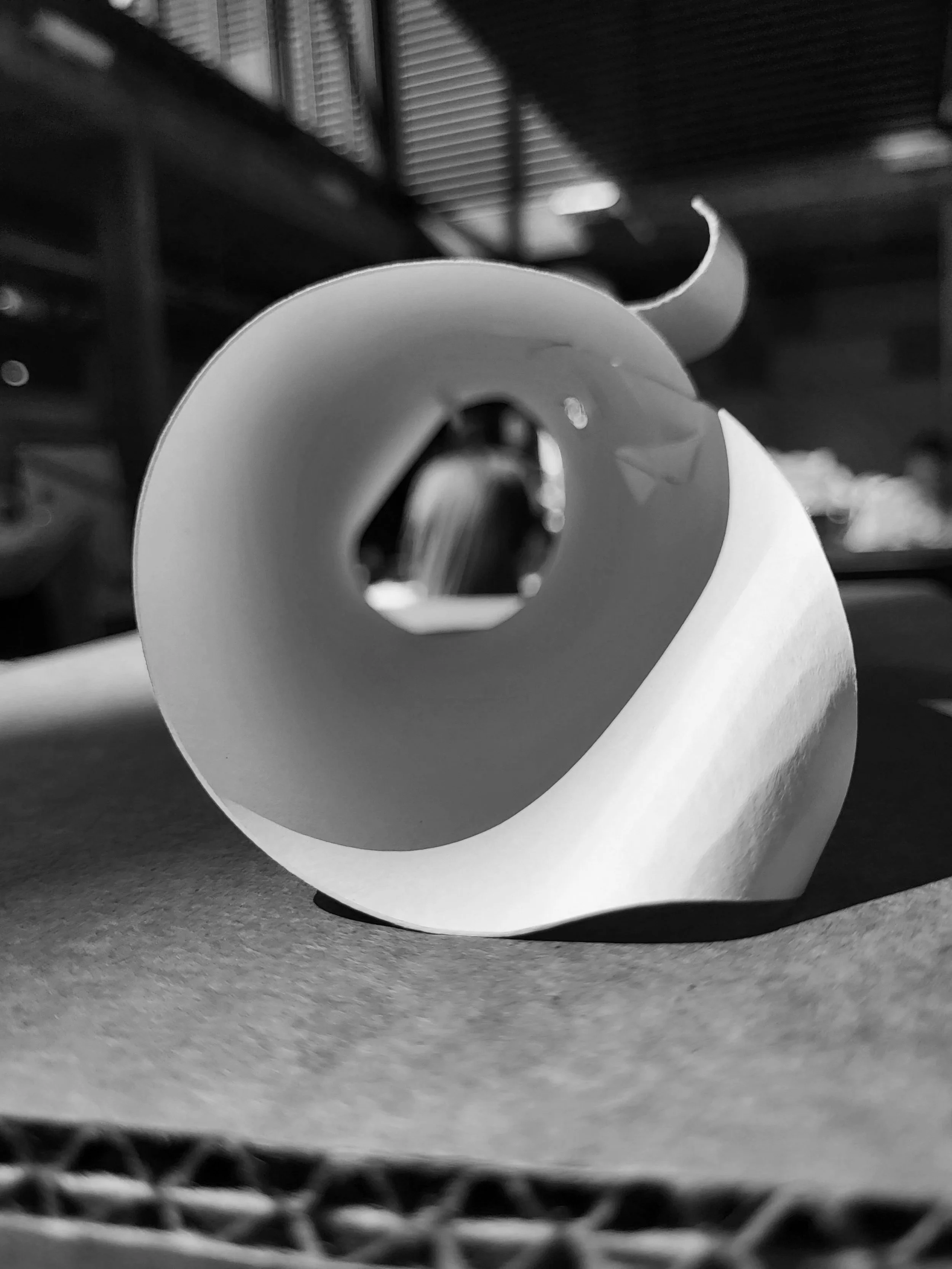
Finding inspiration for each of the compositions was difficult, because I didn’t want to copy or have my composition too similar to another building in creation. I thought each of my pieces could have been improved but the only way I could think of improving my compositions included glue or discontinuity. These compositions invoked a sense of curiosity and possibly fear—the fear that each composition was inadequate or behind others, but also curiosity of what I’m capable to make. after each composition was made I had better understanding of what the Bristol was capable, where its folding/scoring limits were and how far I could “stretch” the paper. I often had planned out the compositions and had followed the plan to a t, but the paper wouldn’t work as I thought, or the plan was flawed, because I overlooked a small detail, so I would have to pivot and change course. I learned that I could do more than I thought I was capable of, and that my mind already understands more about architecture than I originally anticipated. I understand structure and stability, even if it was a process of trial and error. The feedback that I received from my peers aligned with my own self critique.
Paper Volume II
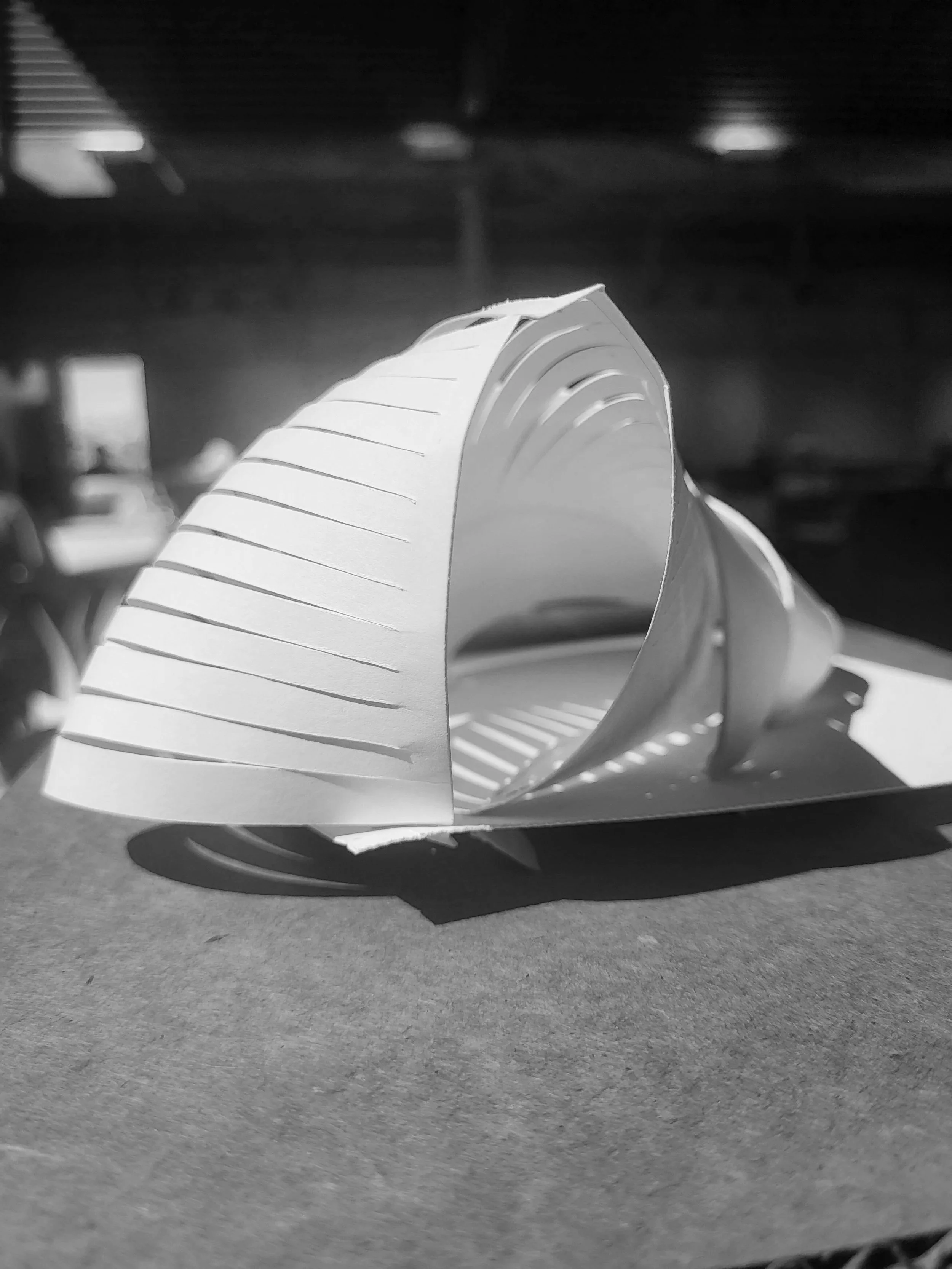

Reflection
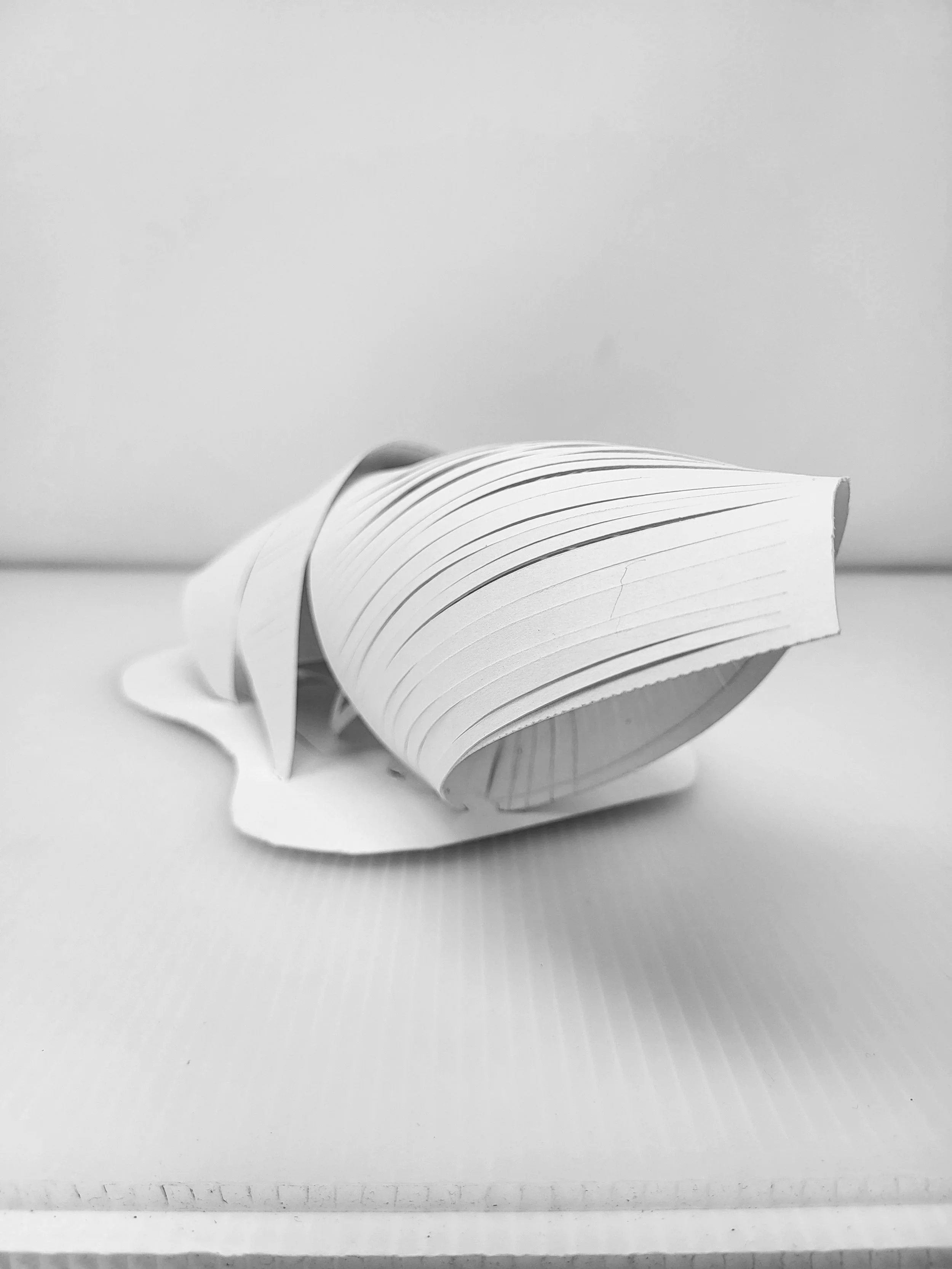
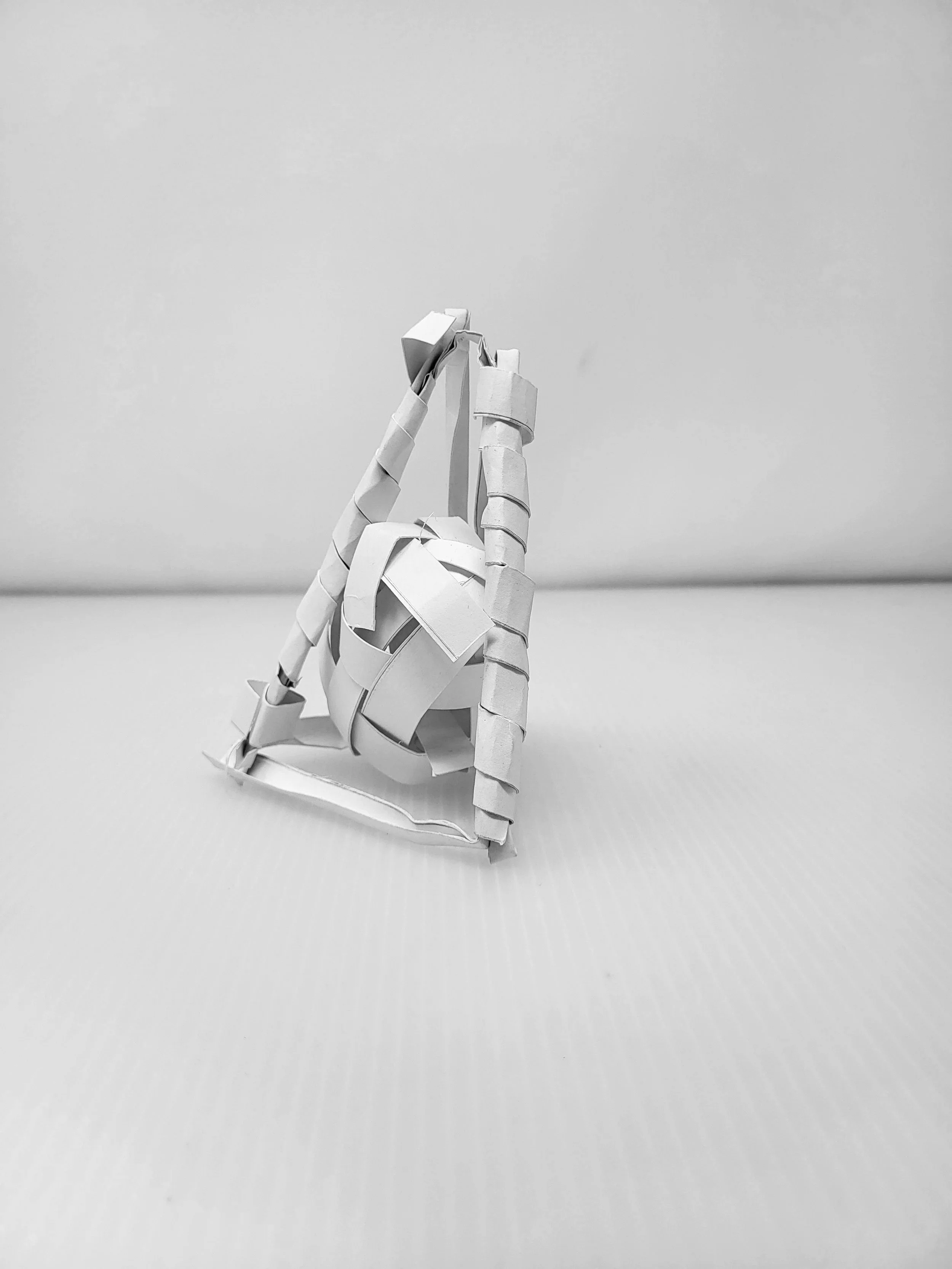
For these compositions I was pleased with each of their outcomes, being able to connect multiple pieces of paper made developing the verbs and definitions exponentially easier. I used a lot of slots and slit to connect the pieces and a lot of wrapping and weaving for these compositions. I defiantly experimented with techniques as to how to connect different pieces of paper without glue of tape. For my layered composition I struggled with the long I had the piece the more the pieces slipped out of their slots, and the piece fell apart occasionally because of it and the pyramid composition I struggled with getting the paper to wrap around the posts with the weaved ball in the center. This piece helped me understand the measurements and math I need to the next part and help me grow and understand my current understanding of architecture. When critique my peers suggest there be more contrast between the layers and for there to be more use of interior space and light. I thoroughly agreed with this critique, I hadn’t even thought of these adjustments when I was creating the composition but when I was critiqued the suggestions really resonated with my grand plan.
-
Part 2 included improving upon part on project, developing them further in 2 new compositions using a few of the following definitions. (These definitions were curated with Gabby Myers and Grace Streek
• continuity
A flow and consistency in actions between spaces and elements.
• connectivity
Refers to how different elements and structures are interconnected or linked to each other.
• loop
A path or a form in architecture that comes back or connects to itself in order to close a space or create a repeating effect.
• crossing
A point in architecture where multiple elements or paths cross or overlap.
• loop-crossing
How continuous elements and paths intersect to create a unified flow.
• oblique ground
An architectural element involving incline surfaces that interrupt a flat area or element
• blurred boundaries
Purposely smoothing and combining edges of spaces and designs to make flowing transitions
• entanglement
Interconnecting and overlapping many architectural elements structurally and in design in order to weave an active spatial connection
• compression
Forcefully pushing or combining two materials together in order to create a more stable or strong structure
• interlacement
Intertwining of lines or materials to create a woven look.
• stratification
The layering of material, spaces, etc., to create depth within the design.
•serial variation
Repetitions of design to evolve the design to create visual or spatial variation.
• serial transformation
A sequence of evolved variations of a design, each step progresses the design and explores variation and continuity.
• stress forming
An architectural technique of applying tension or compression to a material to shape, or curve it.
Paper Volumes III
Reflection
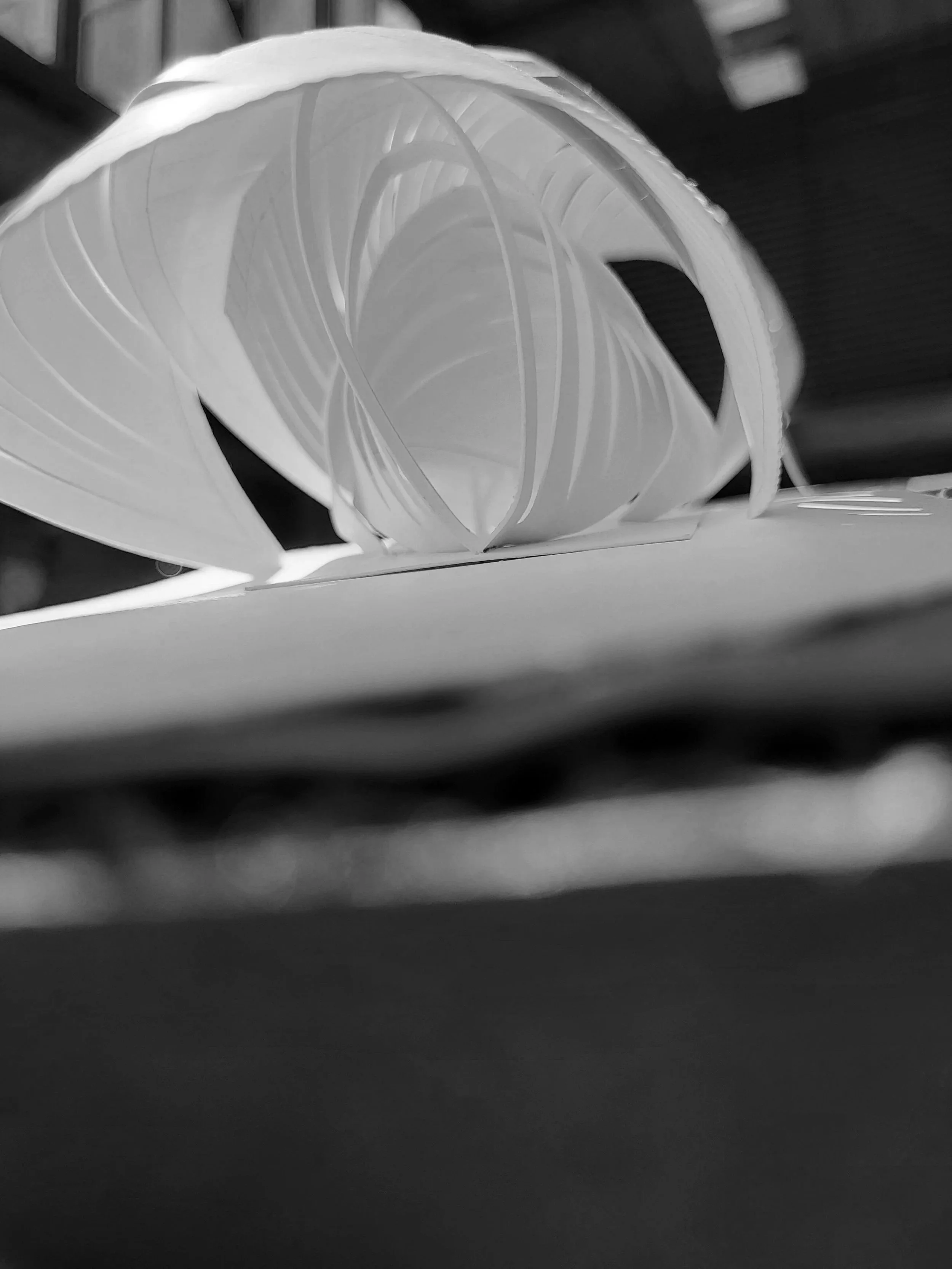
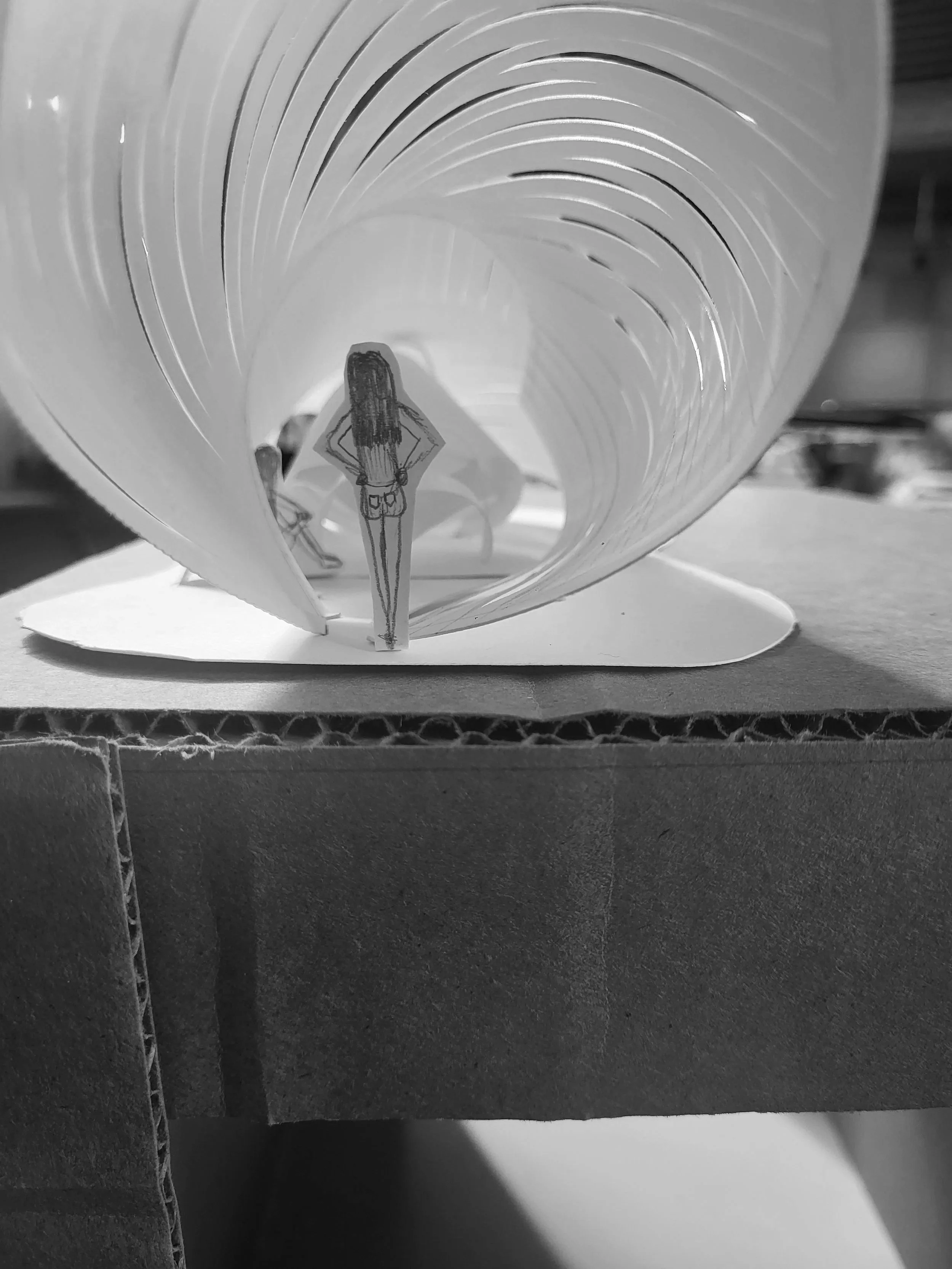
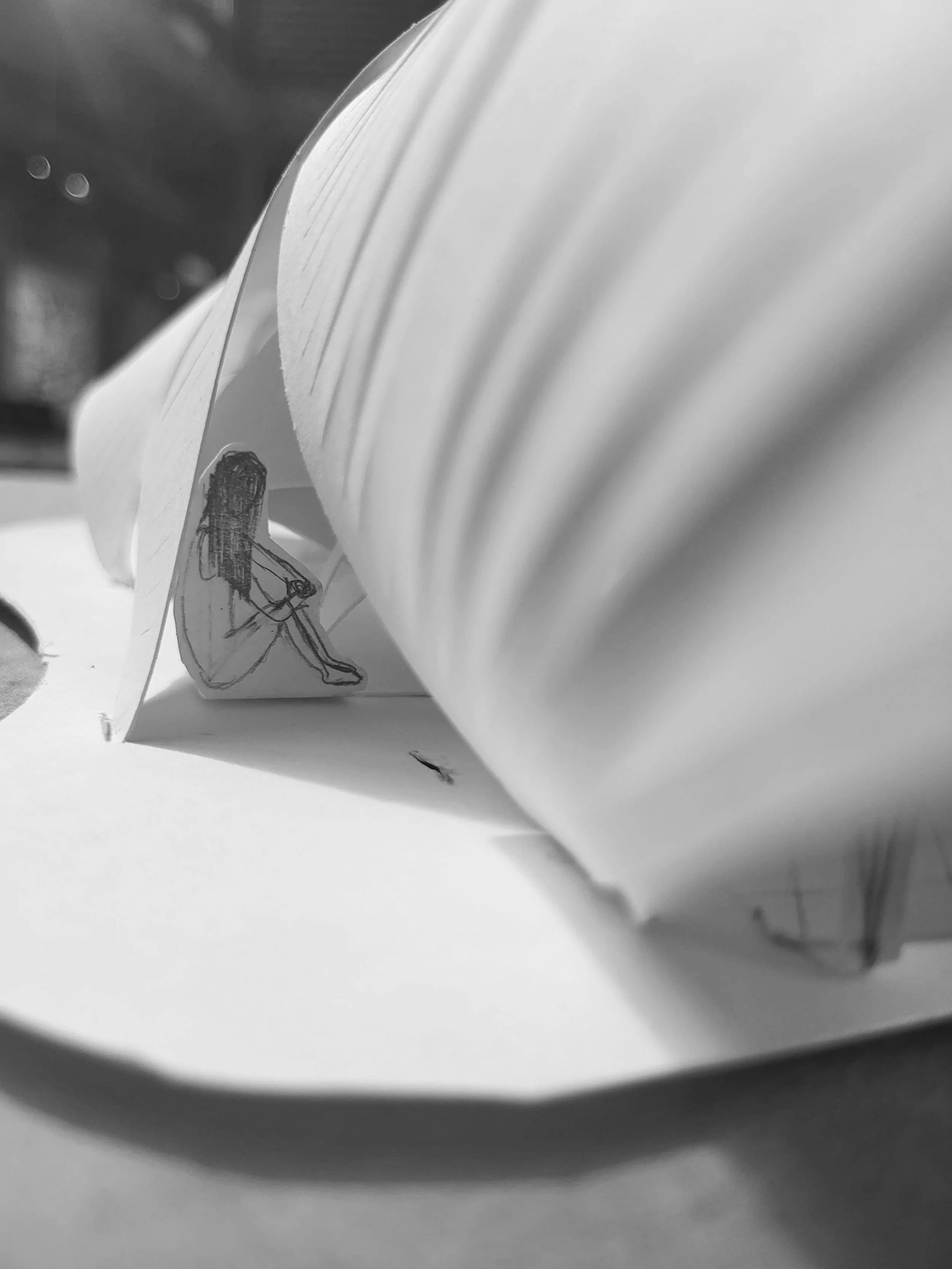
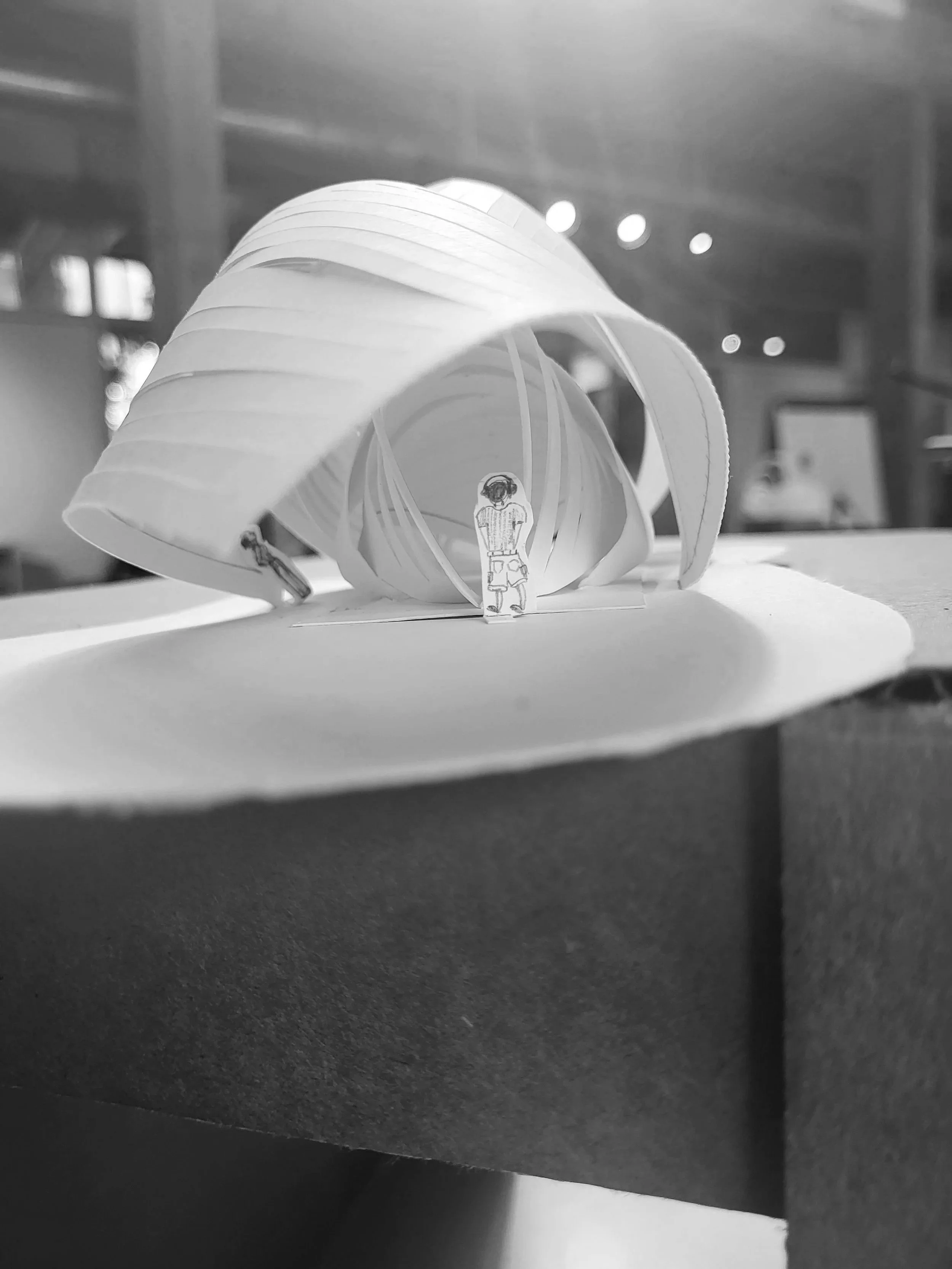
For this composition I was super happy with the outcome, my use of interior and exterior space was fun and is very interesting to look at. With so many cuts in the paper the shadow inside the composition is very intriguing to observe. I followed the critiques my peers gave me and used more of the interior space and cut more slits in the exterior layers for more interesting shadow play. I struggled with the slots and putting the layers in their slots, but I just had to try harder when holding the composition and be more careful when adding more layers to the exterior. I am so proud of the final composition, the shadows and layering are super interesting to look at-at different angles.
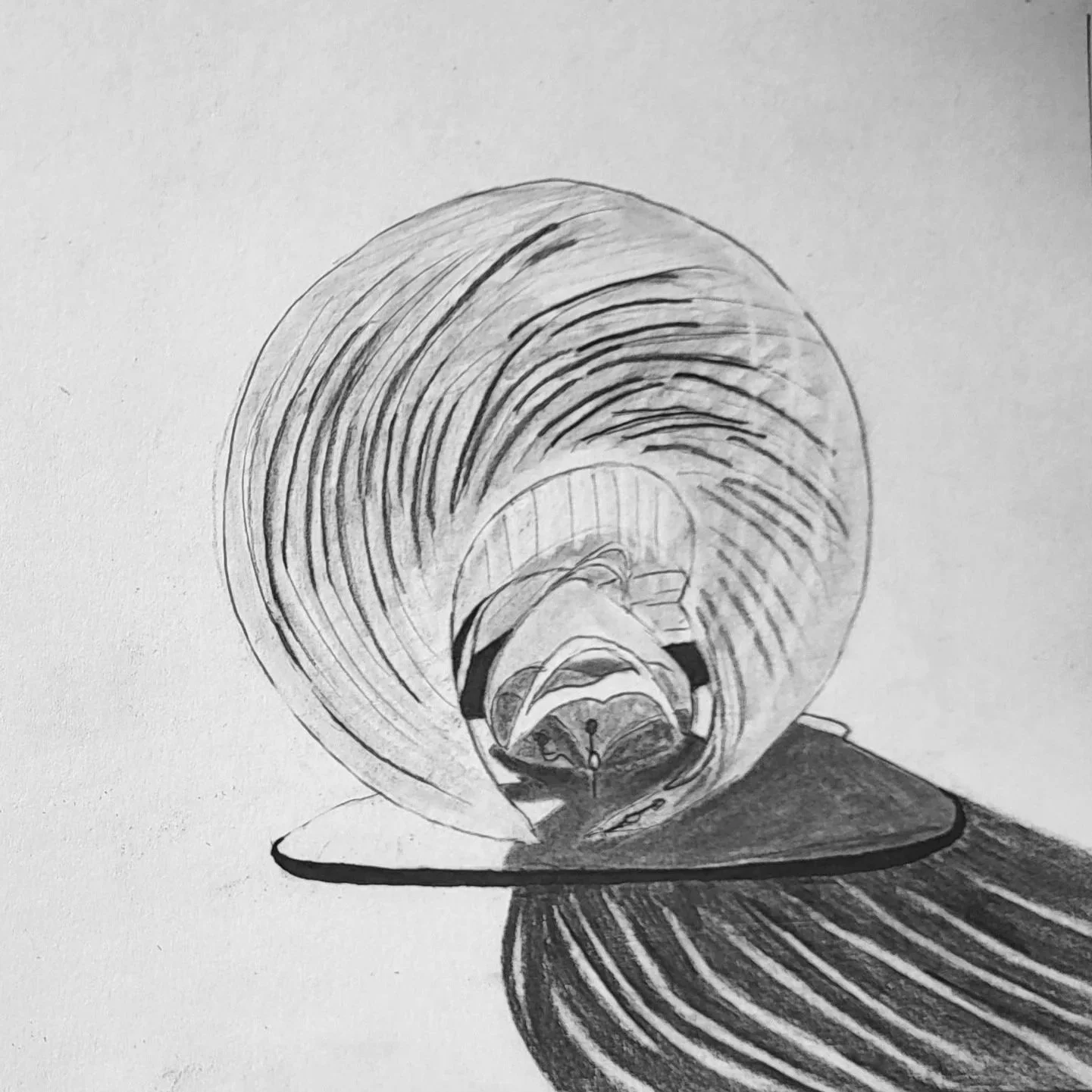
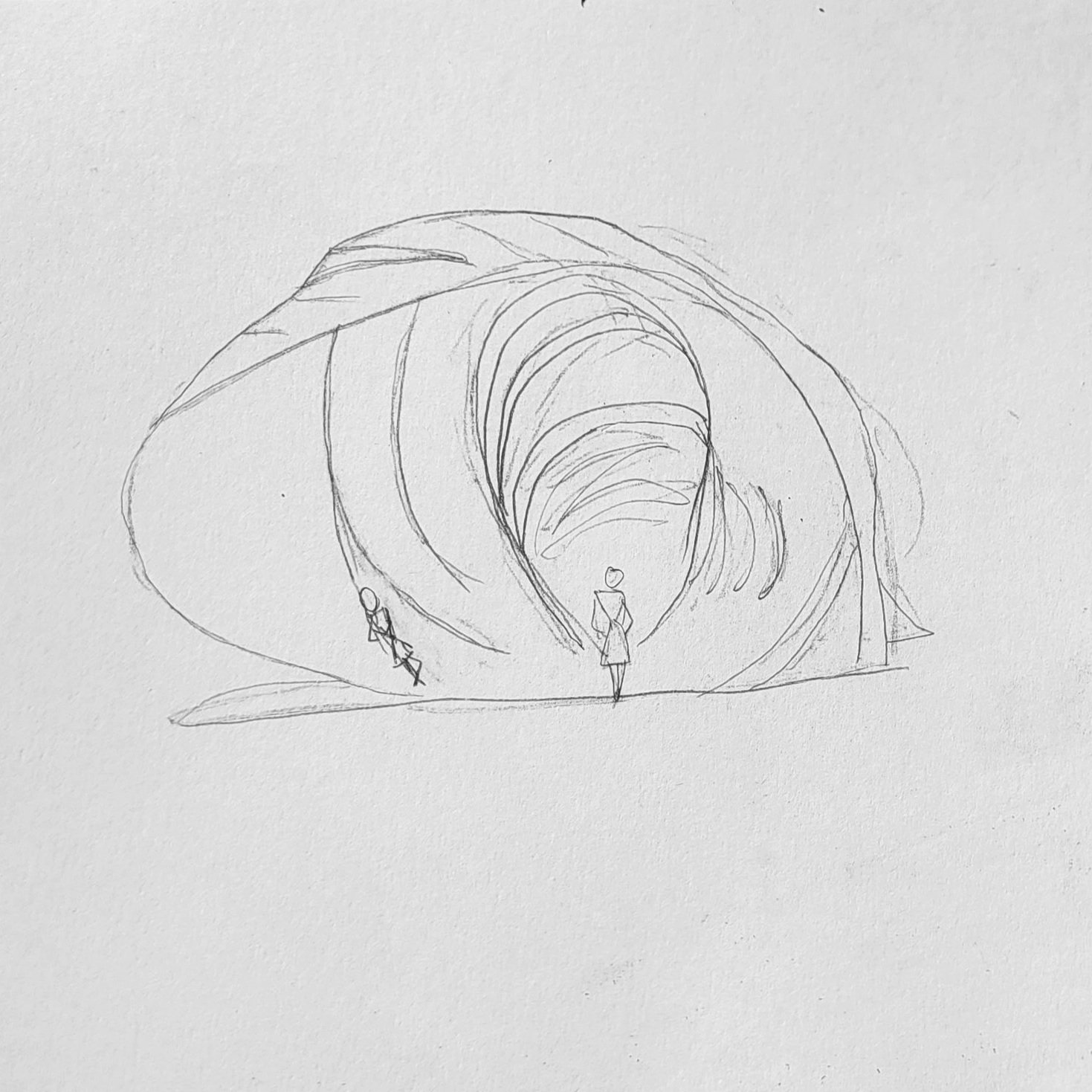
The tracings were easy to do but when transferred to Bristol, the shapes lost their original contrasts and meaning. I had to refer to the image many times to finish the transfer. I found it very difficult to shade the final piece because of the amount of light in the interior, there wasn’t a lot of contrast between the shades of white.